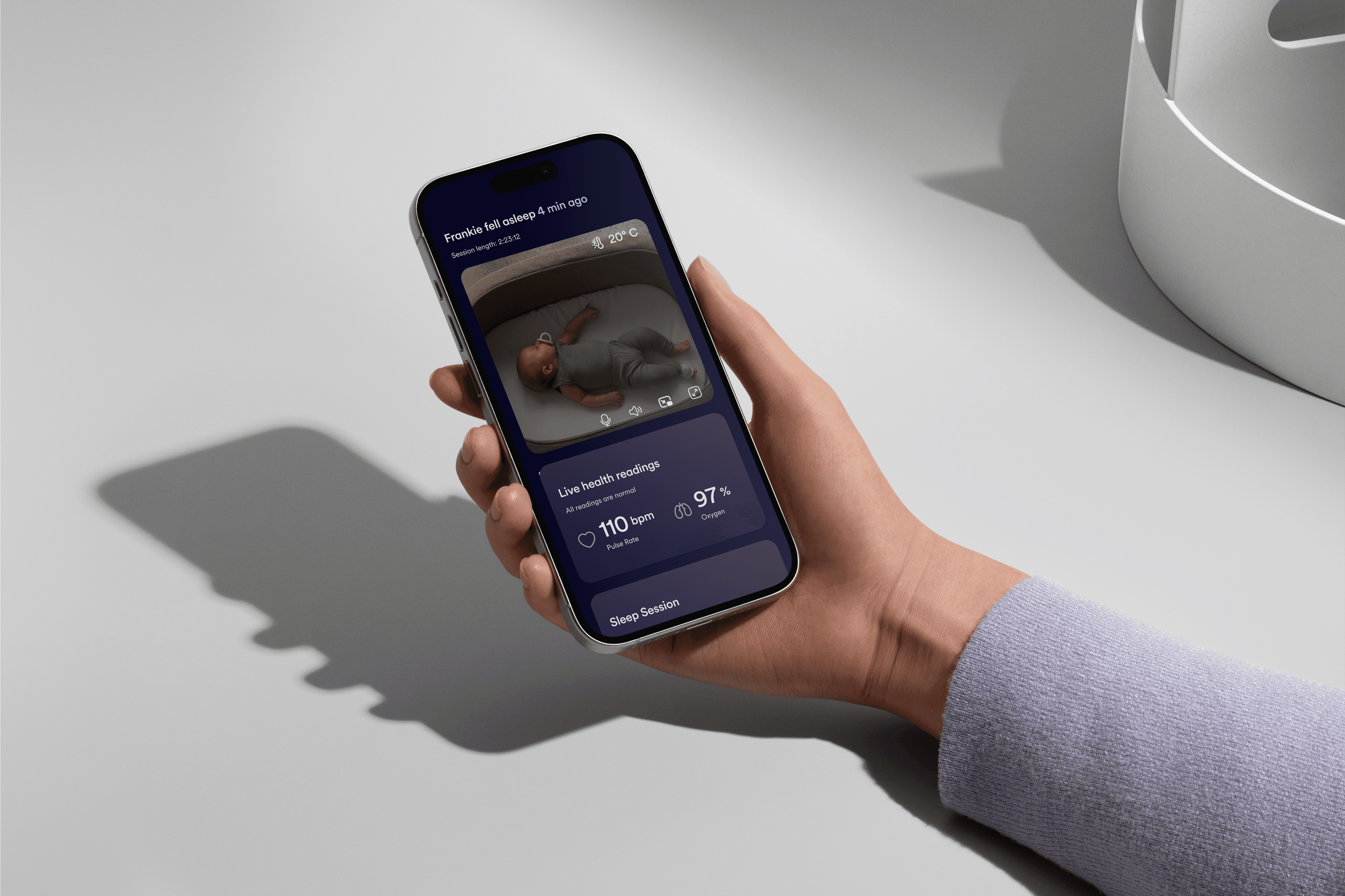
About the project
I led the end-to-end design direction for the Owlet Cam—defining its visual language, user interface, and experience strategy. From early hardware and software research through art direction and validation, I shaped a cohesive ecosystem that feels intuitive, calming, and deeply personal.
The Challenge
Owlet didn’t yet have a camera product in its ecosystem, but parents consistently expressed a desire for a more connected, trustworthy way to monitor their baby. The challenge was to determine if this product should exist, validate its market fit, and design a complete experience—from the physical device to its digital interface—that felt distinctly Owlet.
My Approach
I partnered with product leadership to validate the camera’s opportunity through research, surveys, and interviews with parents and caregivers. Once validated, I collaborated with industrial designers and the UX team to shape the product’s form, function, and visual identity. I led the UI design and art direction for both the device interface and app experience—ensuring consistency across touchpoints and a design language rooted in calm, trust, and empathy. Every design decision was informed by usability testing, visual research, and close collaboration with engineering and product teams.
The Impact
The Owlet Cam became a cornerstone product in Owlet’s connected nursery ecosystem. What began as an unproven concept evolved into a trusted, market-validated experience—establishing new design and brand standards for how Owlet connects hardware, software, and emotion.